Ambience is such a crucial part of what makes a Ghost game a Ghost game: it provides a time machine for the player, whisking them back to a believable version of feudal Japan. On both Ghost games, we had Sucker Punch trips to Japan. Although no audio people went on those trips, I always gave a recorder to someone on each trip, and they invariably returned with usable content. In addition, I was able to travel on my own to capture as much natural sound as I could. Over New Years in December and January of 2016/2017 I made a very calculated 10 day trip to Japan to record very specific species for Ghost of Tsushima, and I knew I needed to go back for Ghost of Yо̄tei (poor me).
Back to Japan
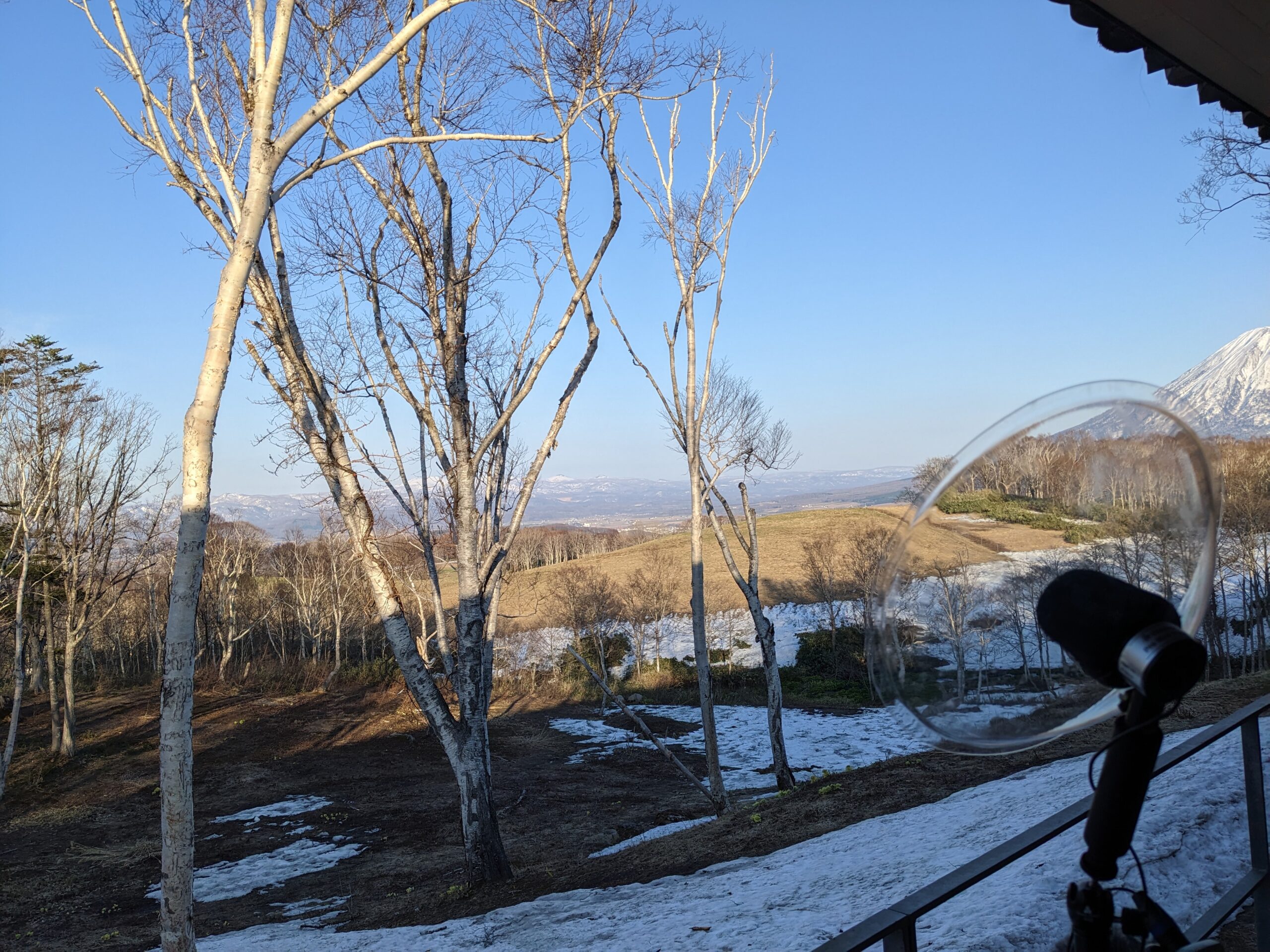
In April of 2023, I was lucky enough to travel to back to Japan, focusing mostly in Hokkaido, and spent about 10 days traveling around Mount Yotei (seen to the right in the picture above), spending time around Kutchan, Lake Toya, Lake Shikotsu and also spending a day at Noboribetsu, famous for its sulfur pots and the inspiration for Saito’s fortress at the end of the game.
I wanted to keep my load light, so brought lots of smaller microphones (Usi Pros, Micbooster Pluggys, and a Sennheiser MKH8060), and small parabolic dish, and a Zoom F3 and Sound Devices MixPre6. I went with a few friends, so I would often hike out somewhere for a half day and meet up with them later.
We also spent a little time in Kyoto and the Seto Inland Sea, so I got a lot of nice recordings there as well. The Japanese Bush Warblers were so prolific around Honshu, I couldn’t believe how frequently I was able to capture that iconic chirp.
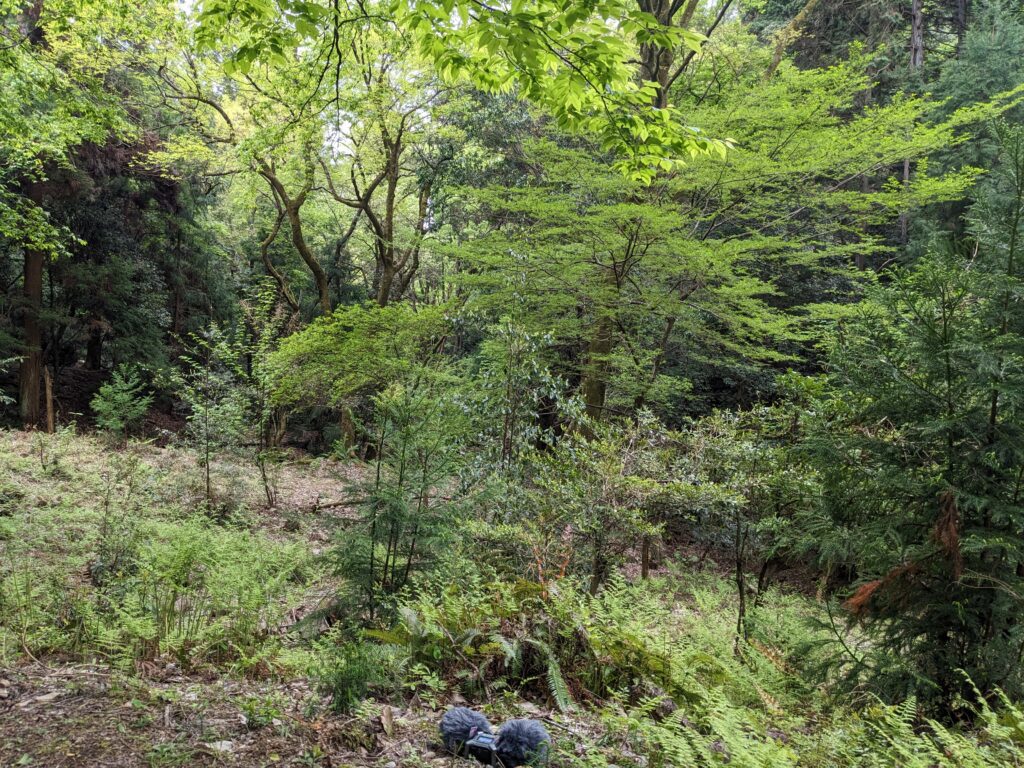
Here’s a recording from Mount Daimonji near Kyoto. Very little processing done beyond cleaning the recording up:
Hokkaido Bound
I was fortunate to travel to Hokkaido on my first trip to Japan in 2016, heading over to the eastern side to Kushiro and Lake Kusharo to record red-crowned cranes and whooper swans, and immediately fell in love with the island.
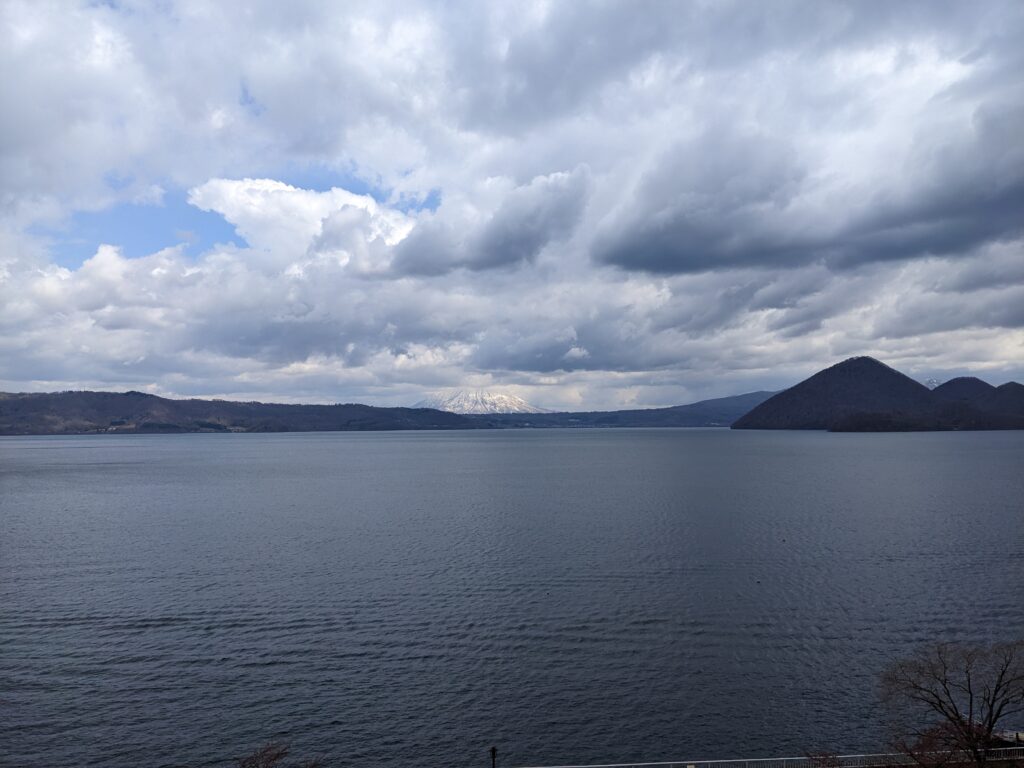
Hokkaido is such an amazing place and, other than Sapporo, feels so much more remote than much of Japan, as it’s relatively sparsely populated for its size, and awash in amazing natural beauty. I got so much incredible content on our trip in 2023, that I was able to replace most of our birds from Ghost of Tsushima with wholly new ones. Beyond the Bush Warblers in Hokkaido, one of my favorite species I captured were some Great Woodpeckers (both drumming and calling) around Lake Toya and Kutchan. Here’s some drumming from Kutchan:
And then there was the Latham’s Snipe. We had just arrived at Lake Toya as the sun was setting. We had what seemed like a nice Air BnB on a hill overlooking the lake. Unfortunately, the house reeked of gas, so as we were airing it out, I set up a recorder on the front deck and this crazy, creepy sound started happening. I had to post it on xeno-canto when I got home just to identify what the heck it was:
Of course, not everything I recorded was birds, and not everything I recorded ended up in game. In Noboribetsu, a town famous for its sulfuric lakes, I was fortunate enough to record the geyser at Sengen Park, which only goes off every three hours. Super cool sound, but nowhere that really made sense to include it in the game
Sound Scenes
Beyond our normal biome-based ambience, we also built a new system for Ghost of Yōtei to more procedurally handle smaller-scale ambiences that we previously hand-placed throughout missions and in various locations, like buildings and villages. The contents of these recordings were more akin to the small things in a scene or place that make it feel alive. Distant bells ringing, shoji screens banging, distant barrels rolling, wood dropping, horses neighing, etc.
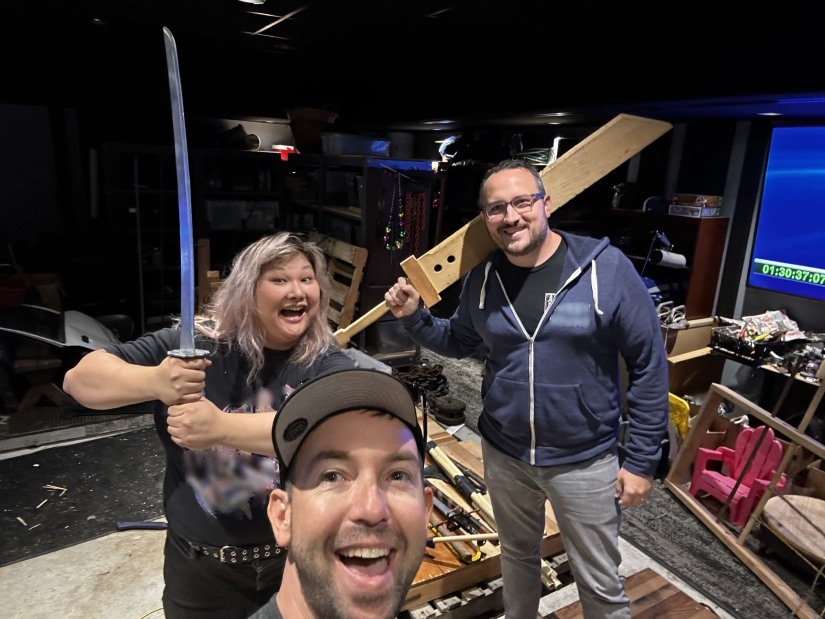
We recorded a bunch of source at Sucker Punch and even more down in San Diego with Joanna Fang and Blake Collins. Josh went down and the three of them essentially combed through the foley room grabbing random props and proceeded to shake, slam, drop or bow them to create a huge palette of sounds we could use for our various scenes in the game whether it was a boisterous inn, a bustling village, a ghost town, a rickety bridge, or a weathered shrine climb.
We then processed the source in three different ways: dry, which was used when the player was near where the sounds would play from, and then a mid distance and far perspective version that used reverb, EQ, and some delay to push the perspective into the distance.
The system in our engine would then play these sounds back from random positions within volumes that we authored in the game world. So rather than having to hand place dozens or hundreds or emitters. We just dropped a volume and assigned that volume a number of scenes that would play out in the volume based on distance from the listener.
Our goal with the ambience in Ghost of Yо̄tei was to improve upon the natural audio beauty we built with Ghost of Tsushima, but also provide more dynamic behavior, more movement and more life. I believe we accomplished this, and I cannot express how fortunate I feel to have been able to to travel– twice!– to Japan to not just record nature sounds but breathe in the natural world. Hearing how a space sounds, the natural pauses, the inherent silences, the unexpected tones, coupled with the visuals, the smells, the presence of being in the space is transformative and crucial in trying to really capture the sense of place.
I love to travel, I love to record, and I truly hope I get to return to Japan again some day and record even more!